 Yield
Yield and waste do not agree
Production says one thing, stores says another and finance says a third. Each team trusts its own sheet.



Food & Beverage · Industrial reporting
Shift, batch, waste and yield records arrive from separate sources. A spreadsheet is rebuilt, a variance appears, and the team traces the batch before trusting the total.

What we hear in food and beverage plants
Production, stores and finance each keep a version of the truth. The gaps show up at month end, when it is hardest to explain them.
YieldProduction says one thing, stores says another and finance says a third. Each team trusts its own sheet.
 Batches
Weights, temperatures and times sit in different systems, so tracing a batch means a hunt.
 Month end
Weeks go into explaining variances that could have been seen on the day.
 Production, stores and finance each quote a different yieldTracing one batch means opening four filesMonth end turns into a hunt for the reason behind a varianceYou walk into the review hoping nobody asks where a number came from
How ABI helps
ABI scopes agreed production and manual records, quality checks and review workflows. First we confirm which recipe, batch, quality and ERP (finance and planning system) data is available.


Records from lines, scales and spreadsheets come into one place, so nobody types the same number twice.
Rules flag a missing weight or an impossible yield, and someone reviews it before it reaches a report.

Production and finance read the same approved figures, so the talk is about what to do, not whose number is right.

Each measure has a named owner, so a question about a figure has one person to ask.
What your team gets
With shift, batch, waste and yield records brought into one reporting path, which means production and finance start from the same figures.

With checks on missing and odd records before the report goes out, which means fewer surprises in the review meeting.

With reviews and corrections logged, which means anyone can see who changed a figure and why.
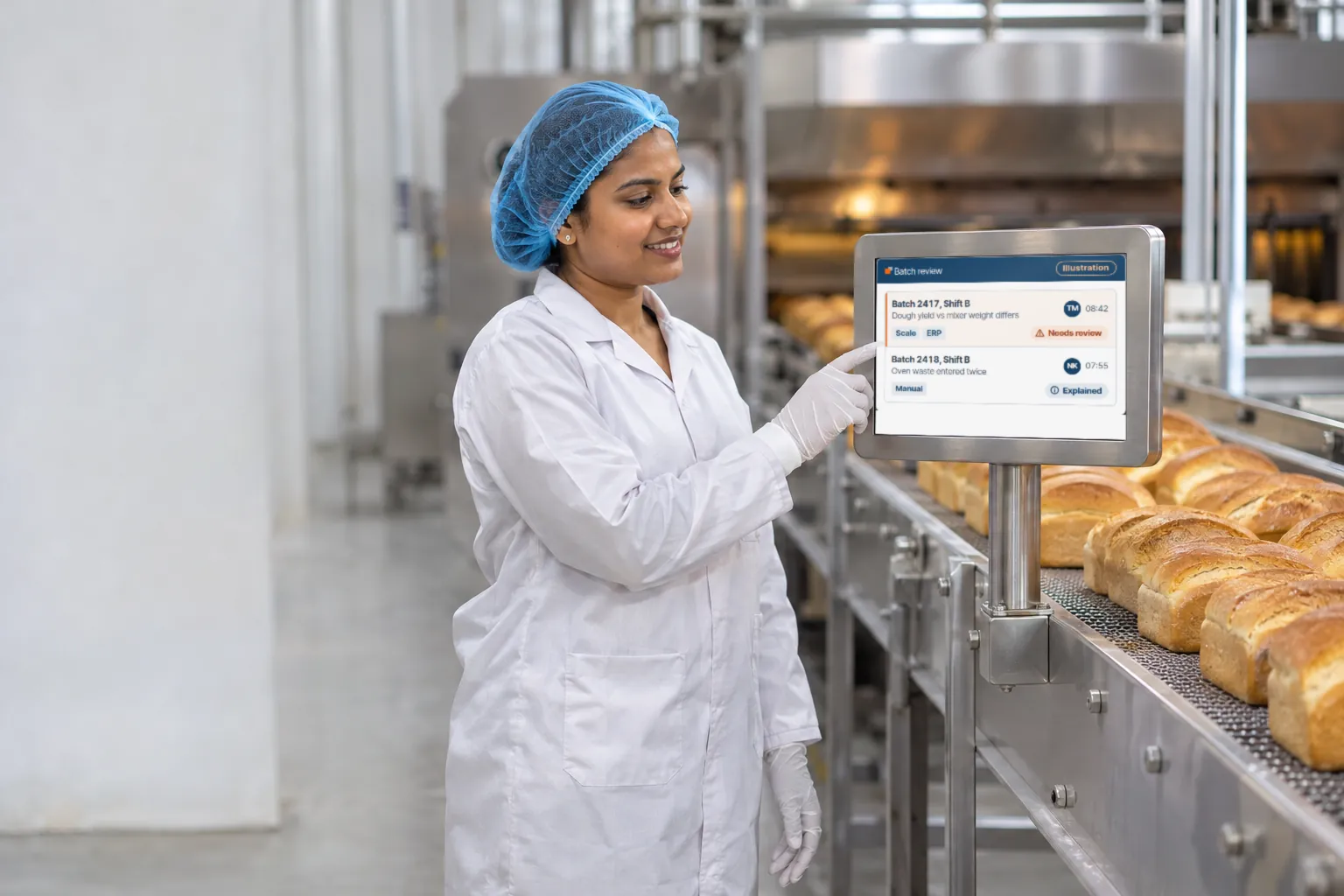 Illustration
At the line
With batch readings checked against your agreed rules, which means a missing reading or an odd weight is flagged during the shift, not in next week’s report.
The operator sees the flag, the supervisor reviews it, and the record keeps the reason.
Illustration: a concept photo with a sample screen. Not a client site or a screenshot.
Reports teams ask for
These are typical starting points. Your site may need a different mix, and the first conversation decides which one goes first.

Where the data comes from
ABI does not ask you to replace what works. The first step is a plain map of where each figure starts.


Which systems and connectors apply is confirmed with your engineering and IT teams.
Where to start
Every site is different. These Presoris modules are a common first choice. ABI confirms the right mix after looking at your production.
Consistent standards and less process variation.
See Product ManagementMore output, less waste and less downtime.
See Production ManagementAccurate stock and fewer shortages.
See Inventory ManagementInformation people trust.
See Data Quality ManagementWho it helps
Starts the day with one agreed production summary, not three versions.
Reconciles production and cost from approved figures, with fewer queries back to the floor.
Sees exceptions and batch records in one view, ready for review.
Sees where time is lost and which equipment keeps appearing in the exceptions.

A practical way to start
ABI has industrial production reporting and data-quality experience. Confirm site fit, responsibilities and scope together.
And we can explore a next step with you.
Identify its user and decision.
Trace how measures are captured and reviewed.
Confirm fit and responsibilities.
Map agreed sources for a clearer path to each figure.
Surface exceptions before relying on the report.
Credentials
Large buyers need suppliers they can onboard without friction. ABI keeps the paperwork current so your team does not have to chase it.
With 100% procurement recognition. Certificate valid to 18 March 2027.
ABI Solutions (Pty) Ltd, registration 2016/260973/07, in business and in good standing.
Experience with the Adroit process management platform, alongside the wider plant systems.
The B-BBEE certificate and company details are available to your procurement team.
Before a conversation
No. This is reporting support, not certification or regulatory advice.
No. ABI starts from the systems you already run and looks at how their data reaches the report.
ABI can help bring batch records together for reporting. Recall and compliance decisions stay with your quality team.
It is very common. A spreadsheet can be a source, with rules that check what comes in and a review step before it is reported.
We do not assume it. Your systems, connectors, access and setup are checked with your engineering and IT teams first.
Start with one report
If you are ready to stop chasing figures and start explaining them, start with a short conversation. Tell ABI what you report, where the information comes from and what happens when figures do not line up.